


Mika Hakkinen’s sabbatical might be one of the longest in the history of sport, after the Finn first announced he would be taking a break at the end of 2001.
After winning titles in 1998 and 1999, the reigning world champion had a year plagued by reliability problems in 2000, which led to Michael Schumacher’s first title with Ferrari.
Ferrari questioned whether Schumacher could deliver, and when he crashed at Silverstone in 1999, the team even considered replacing him. Their success in 2000 would kickstart an unprecedented run of title wins for the German over the next four years, while it would spell the beginning of the end for his main title rival at McLaren.
In 2001, Hakkinen had a slow start to the year with four retirements in the first seven, while it took until the 11th round at Silverstone for him to finally win a race after McLaren managed to outrace Schumacher.
Hakkinen was already having doubts about the season. Ferrari’s car was strong, and McLaren’s reliability proved to be a sticking point again. But it was a crash that happened earlier in the season that kick-started the decision for the Finn to effectively retire from F1.
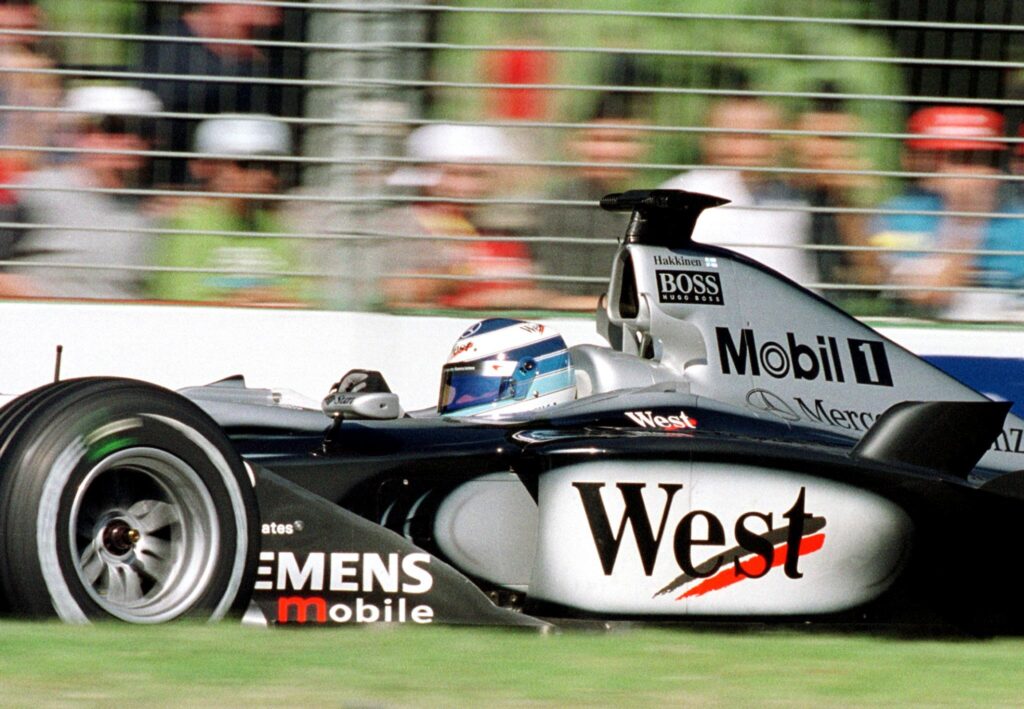
Mika Hakkinen’s crash at 2001 Australian Grand Prix led to him taking a sabbatical
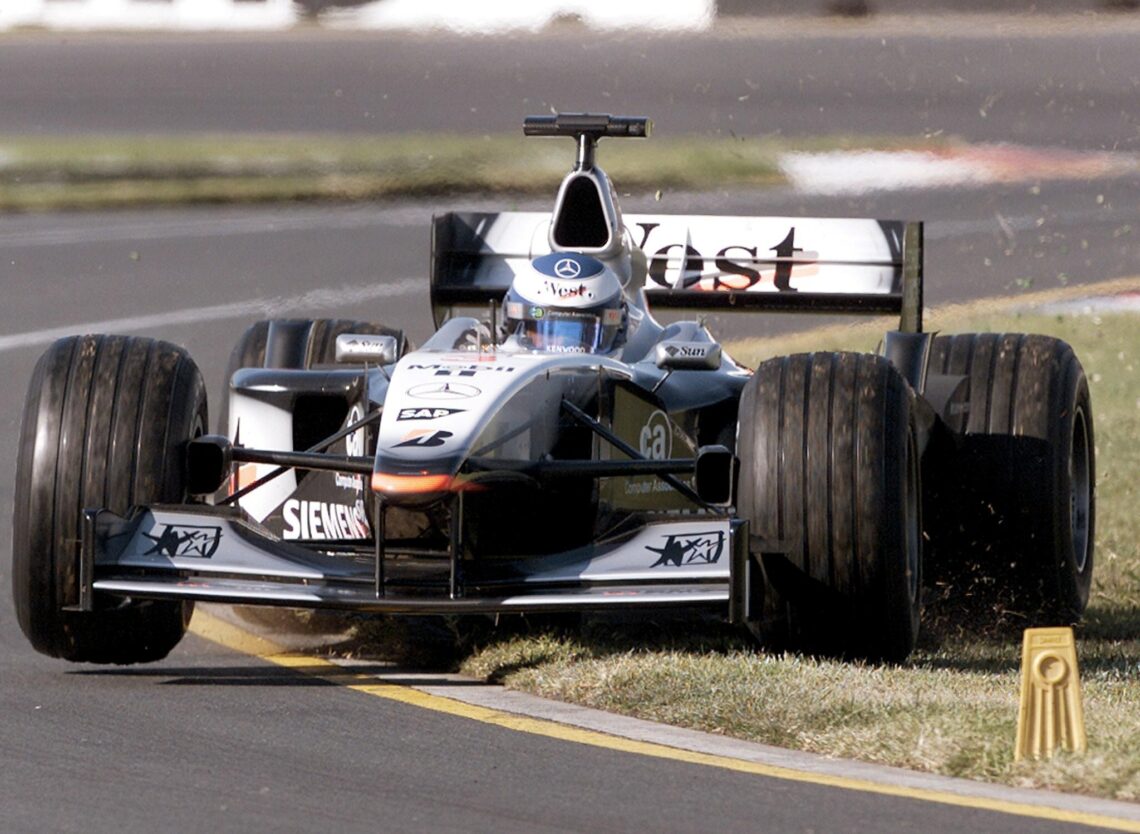
The season started with a retirement for Hakkinen at Melbourne, a big disappointment after the Finn started from third place. It was the third year in a row that Hakkinen retired, after the left-front suspension failed at high speed on his McLaren MP4-16.
Approaching the high-speed Turn 11, Hakkinen suddenly lost control of the rear of his McLaren. The tarmac run-off made it difficult to stop, with him ploughing into the barrier backwards.
Hakkinen walked away shaken, and later recalled how the crash led to him contemplating retirement when writing a column at the end of the 2001 season in Autosport.
“Then at the first race in Melbourne, I had suspension failure and a big crash. It is never nice to experience an accident like that. I was doing 300km/h (180mph), the front suspension broke and I hit the wall. It is never easy to come back after that kind of accident,” wrote Hakkinen.
“When it happened, I asked myself, was it meant to depress me, to diminish my motivation? I had already been thinking about a sabbatical and what happened in Melbourne did not really help.
“In the race we were doing quite nicely. I was catching Michael’s lead, then the car broke, I hurt myself and I was annoyed. I had to do something to my feelings. It was not good for myself and not good for the team. The best idea was to have a break.”
READ MORE: When Kimi Raikkonen was handed an F1 win ‘by mistake’ after ‘crazy’ 2003 Brazilian Grand Prix
Fatherhood made Mika Hakkinen more conscious of F1 dangers
Being from Finland, Hakkinen was always an unassuming character in F1. Rarely offering anything beyond a small soundbite, he was not a driver who would kick up a fuss unless it was necessary.
Schumacher’s wild defensive tactics, which led to Hakkinen’s iconic double overtake at Spa, triggered an intense discussion between the pair about what is and isn’t acceptable when going wheel-to-wheel.
But he was never outspoken, so it was fitting that it would be a sabbatical that would eventually lead to his retirement. Hakkinen was open in his latter years about how much energy it took out of him competing at the highest level, plus he had become a father in 2000 and it gave him a different perspective on life.
“I doubt that the birth of Hugo affected my speed, but on the other hand I know that this is a dangerous sport. When I have something in my life that I would never ever want to lose, I am looking at things from a different angle. When a man gets older, he looks twice to the left and twice to the right before crossing a street. When I was younger, once was enough,” wrote Hakkinen.
The 2001 season ultimately ended in disappointment for the Finn, finishing fifth overall in the standings with just two victories to his name. That was that, although the country of Finland would see another rising star promoted in the form of Kimi Raikkonen for the 2002 season at McLaren.