

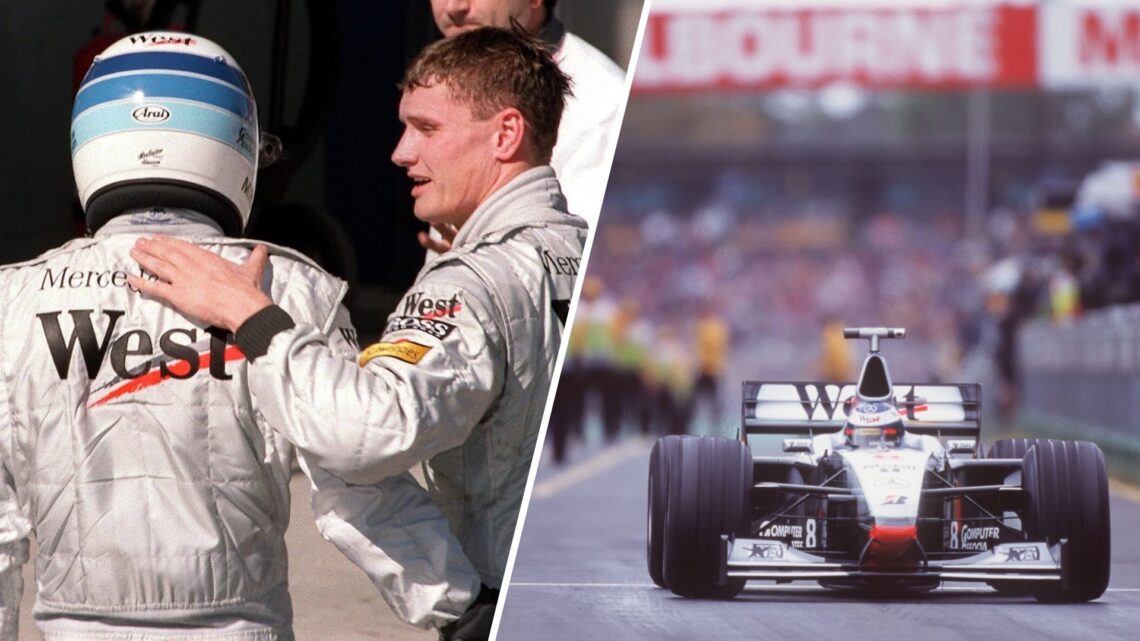


Team orders are part of Formula 1 history, but they are also incredibly controversial when deployed and can be used to accuse a team of favouring one driver over the other.
That’s exactly what happened in 1998 with McLaren and their two drivers, Mika Hakkinen and David Coulthard. That season would be the year of new regulation changes with narrower cars and grooved tyres designed to slow the cars down amid safety concerns.
Technical director Adrian Newey produced the MP4-13, an evolution of their 1997 machine that used McLaren’s ingenious and now outlawed brake-steer system.
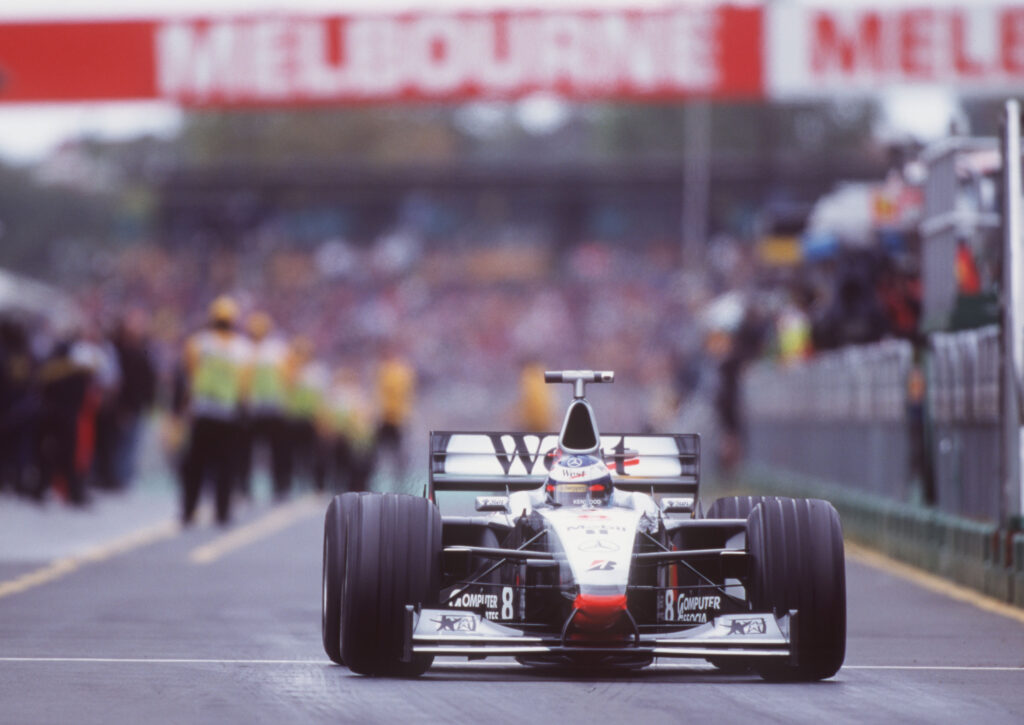
McLaren’s car was fast but often fragile because of the reliability of its Mercedes V10. At the opening round in Melbourne, Hakkinen took pole by 0.043s from Coulthard, but while the Finn would lead the race coming out of the first corner, a rather bizarre set of circumstances would develop that would lead to an unconventional team order.
McLaren uses team orders at 1998 Australian Grand Prix
Hakkinen beat Coulthard on the run down to Melbourne’s Turn 1 chicane with ease, but 36 laps into the race, the Finn unexpectedly drove into the pits.
It caught McLaren by surprise, with Hakkinen forced to drive through the fast lane without stopping, effectively losing him the lead. He was called into the pits properly four laps later, but it left Coulthard with a big gap in the lead.
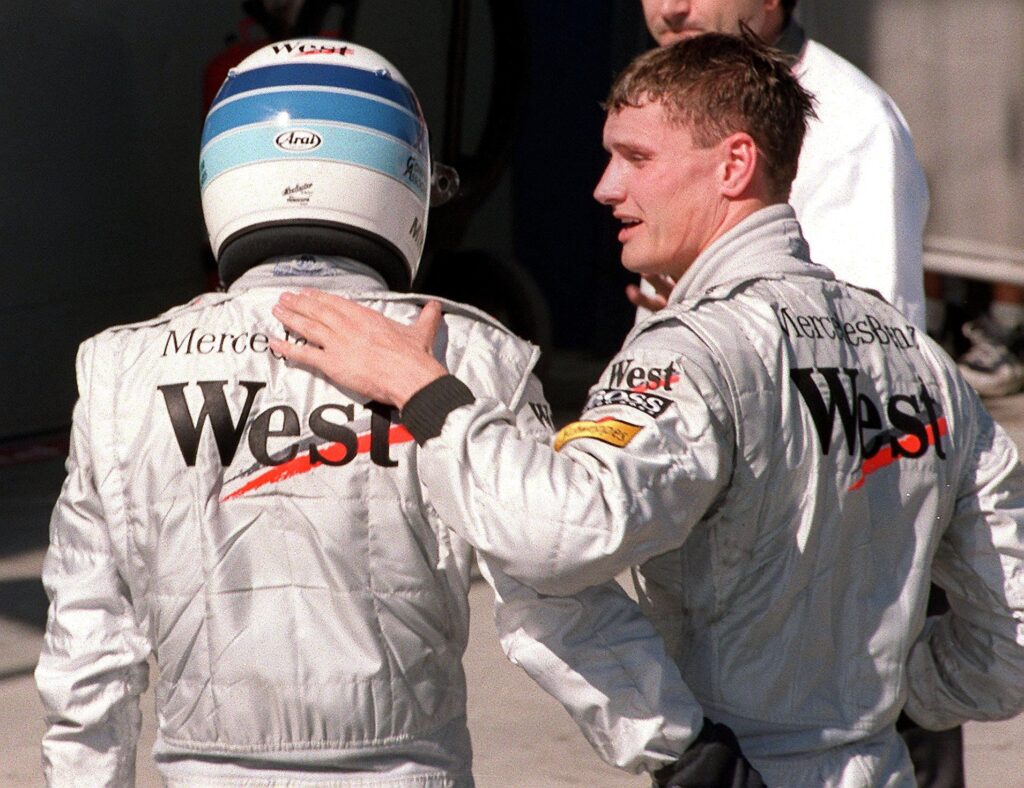
Hakkinen would set in pursuit of his teammate, catching him at a rate of two seconds per lap. On the final lap of the race, Coulthard was told by McLaren to let Hakkinen pass for the win. He obliged, and the Finn won the race on the finish line by just 0.702s.
But why the team orders in the first place? Was it born out of sympathy for Hakkinen’s blunder? Hakkinen explained when speaking to the Australian GP: “We made a deal simply before the race that the driver who is first at the first corner is going to win the Grand Prix. So there is not going to be any fight.”
Coulthard elaborated on why McLaren made the agreement in the first place: “We as a team did it for a good reason, which is we had a fast car but it had been unreliable at winter testing. So we knew if we pushed 100 per cent, then the chances of finishing were very slim. So to get both cars to the end, even though it was in the wrong order for my liking, was a big success for the team.”
The result led to uproar with Australian GP promoter Ron Walker, who accused McLaren of manipulating the race result and making a formal complaint to the FIA. McLaren would be investigated by the World Motorsport Council, but they were ultimately cleared.
Ron Dennis claims Mika Hakkinen’s radio was hacked in 1998
Years later, McLaren would be embroiled in another team orders controversy in 2007 between teammates Lewis Hamilton and Fernando Alonso in Monaco.
When asked about whether McLaren regularly intervened during races to manipulate an outcome, Dennis claimed that it was a radio that was hacked in 1998 with Hakkinen when speaking to Autosport.
“We do not and have not manipulated Grands Prix, unless there were some exceptional circumstances, which occurred, for example, in Australia [1998], when at that time someone had tapped into our radio and instructed Mika Hakkinen to enter the pits,” said Dennis.
“He entered the pits and I reversed that, because that was unfair, that was an outside influence on the outcome of the race. That is one of the very rare occasions that there’s been a team order.”
FIA bans team orders in 2002 but lifts it in 2011
The FIA would later ban team orders in 2002 following the Austrian Grand Prix, when Rubens Barrichello was instructed to move aside for Michael Schumacher.
Barrichello waited until the final corner of the last lap to instigate the pass, generating a farcical image where the lead driver was being overtaken at the chequered flag.
To protect F1’s image, the FIA banned team orders in a bid to curb manipulation of race outcomes. Teams would later find ways to bypass the ban, using coded messages.
This happened in 2010 when Ferrari instructed Felipe Massa: “Fernando is faster than you” at the German Grand Prix, in an instruction to let teammate Fernando Alonso past. The ban on team orders was later lifted in 2011.