

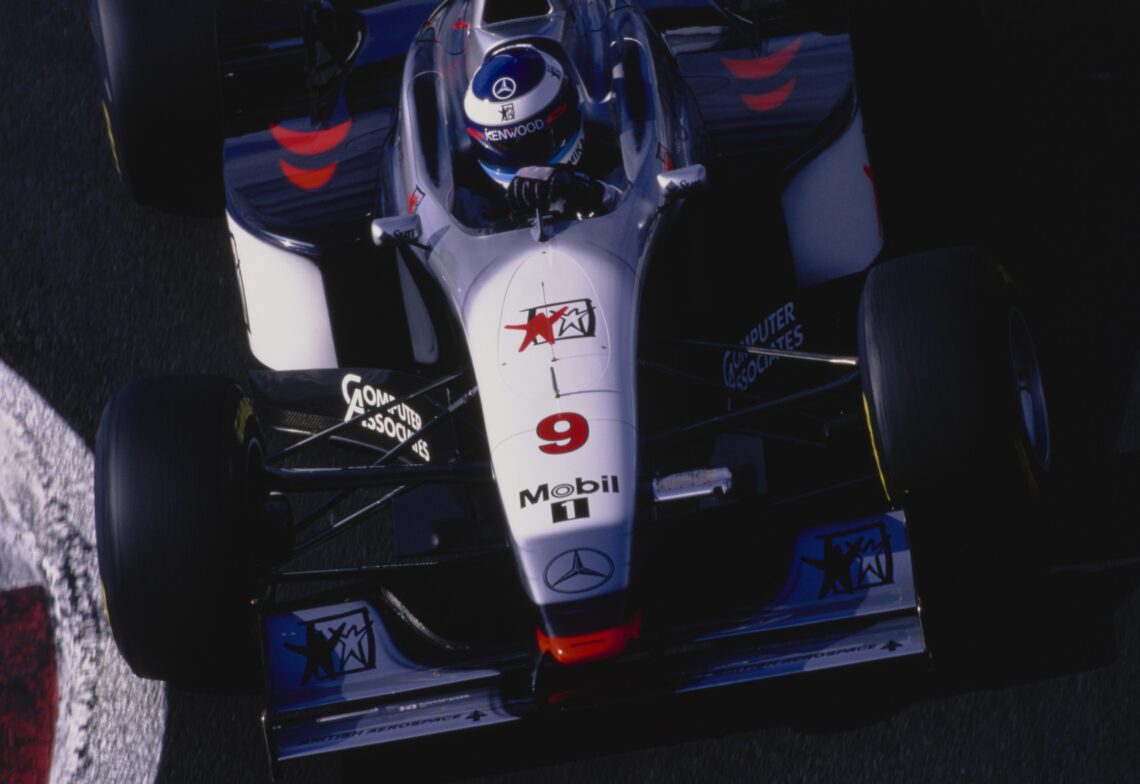


Formula 1 teams are always looking for the extra tenths of a second to make their cars go faster, and it often leads to ingenious engineering solutions.
During the 1997 season, McLaren wanted to figure out a solution to the problem they were having with mid-corner oversteer. It was when F1 cars had grooved tyres which were skinny at the rear and bulky at the front, while also having to handle the rev-range of a screaming V10 engine.
McLaren had reinvented itself in the years previous under the leadership of Ron Dennis, with the team adopting sleek grey, white and black team colours in a departure from the Marlboro red that was used in the Ayrton Senna and Honda glory years.
David Coulthard had been signed from Williams, and Mika Hakkinen was their main driver, who they brought in during the mid-1990s, and was destined to be their next world champion. A lot of R&D had went into their challenger for 1997, the MP4/12, and it was in part designed by Adrian Newey.
But it would be a single and rather unusual concept that would enable them to solve their oversteer issue.
McLaren engineer had eureka moment over Christmas before 1997 season
McLaren’s chief engineer at the time was Steve Nichols, who was thinking about concepts over the winter break in 1996. The American was in the bath when he had a eureka moment, which he recalled in an interview with McLaren.com.
“It was Christmas time and I was on holiday at my parents’ house and lying in the bath. We typically set the cars up with quite a lot of under-steer – at the time we had fairly skinny rear tyres and fairly meaty front tyres – and I had this idea to put a rear brake on in the corners, to sort of dial out the understeer,” said Nichols.
The idea became known as ‘Brake-steer’ internally, which was a concept that allowed the rear brakes to operate on either the left or the right side of the car only, providing benefits under acceleration in the corners.
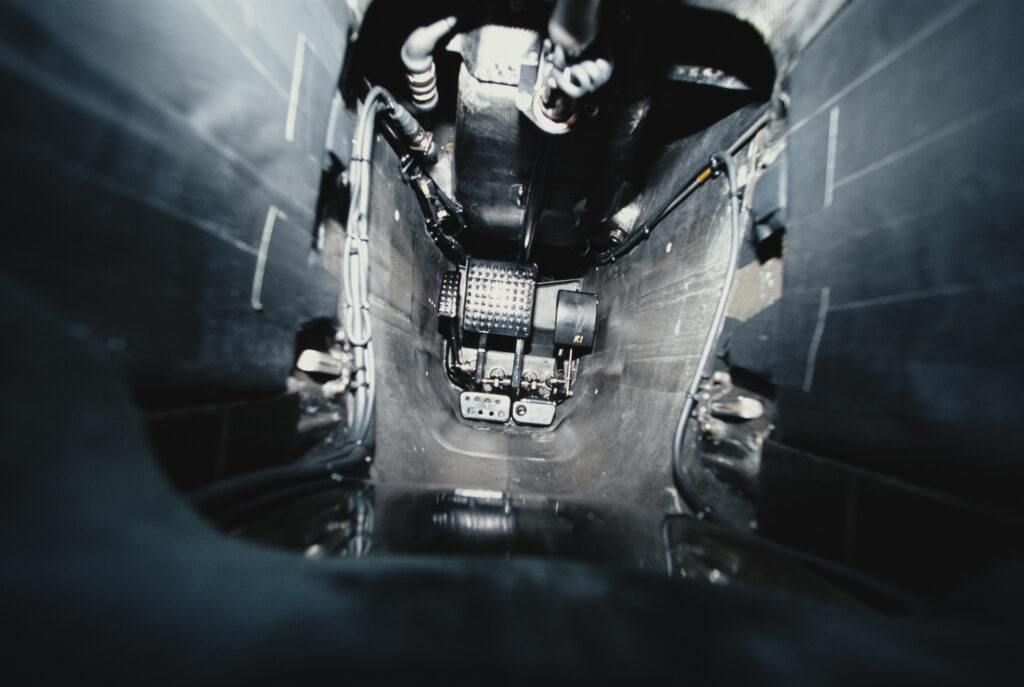
It was characterised by having a third pedal in the cockpit, which the drivers would use to activate the system, even though it looked like a clutch pedal in a car that had a manual sequential gearbox that used paddle shifters on the steering wheel.
David Coulthard didn’t want to test McLaren’s brake-steer system
Hakkinen was the first driver to fit the system to his car in 1997 during a test on track, which was largely down to the fact that it was difficult to implement on Coulthard’s car.
“I had thought of it specifically for David. Because he used to say he didn’t like oversteer. I thought this would give him the opportunity to set up the car with quite a lot of understeer, and then balance it with the fiddle brake. He still had a foot clutch because he was an old-fashioned kind of guy! He actually refused to test it, because he thought it was weird,” said Nichols.
The system was unconventional for drivers, in that they had to use the normal brake to slow the car down and then use the brake-steer pedal to balance the car through the corners. Drivers had to apply pressure to the pedal, which was done on purpose to prevent them from spinning by just tapping it.
Not only would it provide extra stability, but it made their cars more drivable in an era when mid-corner grip was at a premium due to the lack of slick tyres and reduced aero for safety. The idea behind having an extra pedal, making it look like there was a clutch, came later in the design phase when putting it into Hakkinen’s car.
“Mika was using the paddle clutch, so we just went back to an extra pedal – still only three, but throttle, brake and fiddle-brake (brake-steer). He was very open-minded so he went out and tried it, and on his first run, he went half a second a lap faster, which was pretty enormous,” explained Nichols.
McLaren gained seven tenths in lap time with brake-steer before it was banned in 1998
Indeed, the lap gains were big for McLaren, with Newey recalling in his book, How to Build a Car: “We were wondering how much of our advantage had been down to the brake-steer system. The McLaren personnel who had been instrumental in developing it during the 1997 season estimated it to be worth around three-quarters of a second per lap, which was pretty much what our advantage appeared to be at Melbourne.”
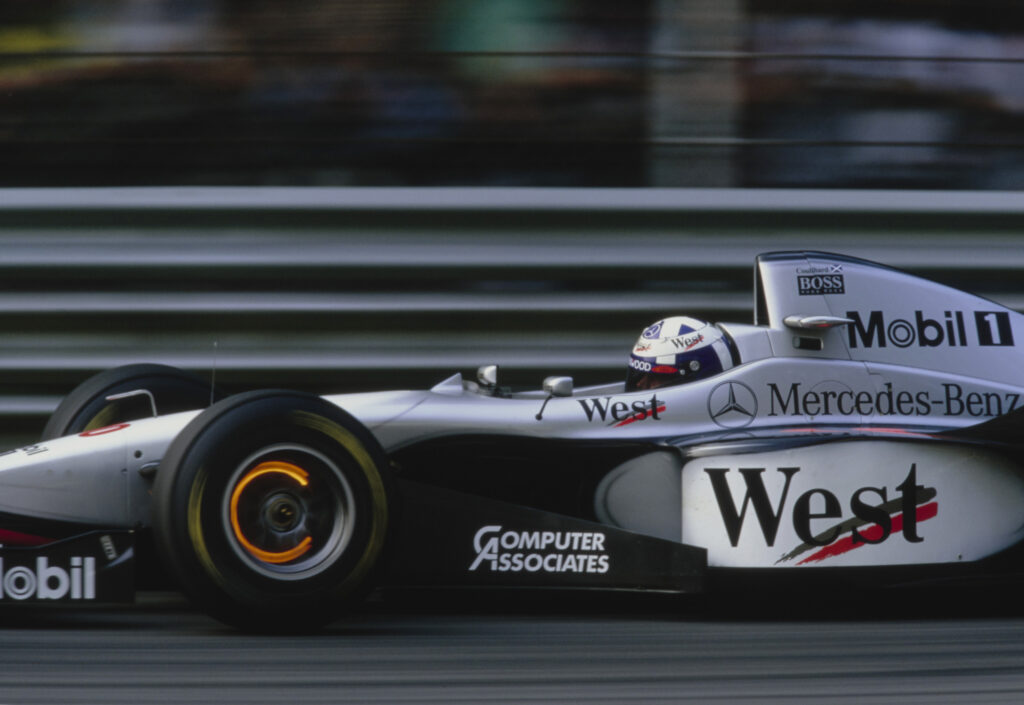
Rival teams initially didn’t know what McLaren was up to, but it would eventually unravel when a photographer noticed the rear brake discs glowing where the cars were accelerating out of the corner (see image above). The theory was that McLaren were using some sort of trick brake system, but it was tough to prove if there wasn’t any evidence of it in use on the cars.
At the next race in the Nurburgring, both McLaren cars would retire with problems, enabling the photographer to prove his theory by taking a photograph of the footwell. Although Coulthard had left his steering wheel on, preventing a camera and flash from getting in the cockpit, Hakkinen had taken his off and gave full view of the footwell when the photographer poked his camera in there.
When the photos were developed a few weeks later, they showed the unique three pedal arrangement on Hakkinen’s car. Once the photos were out in the open, rival teams began to lobby for the system to be banned without realising how the system worked.
Ferrari argued that it was four-wheel steering, in part because McLaren had internally referred to it as ‘brake-steer’ by name, even though the system did not pivot the front axles. The lobbying from the teams worked, and the FIA decided to ban the system early in 1998.
The system would go on to have another life on road cars, with it being adapted and applied to some McLaren road cars as a stability control feature, using the ABS to achieve a similar effect.