

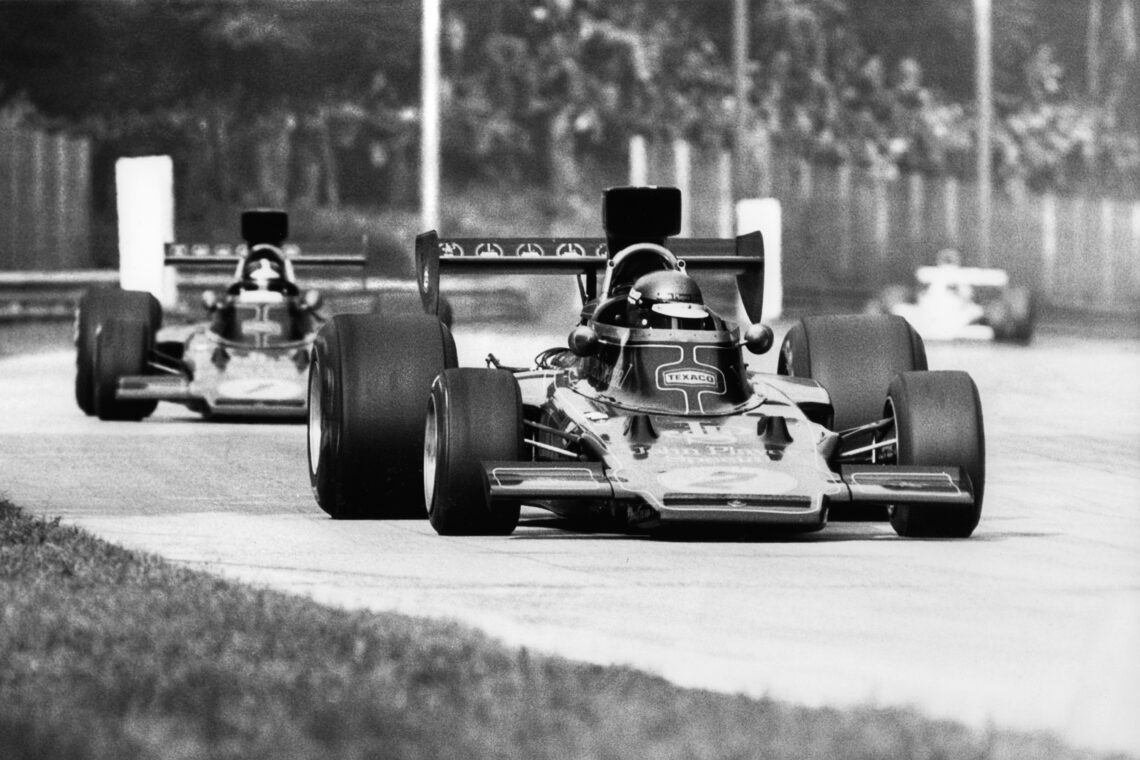

The 1973 Formula 1 season was a close contest between the Tyrrell of Jackie Stewart and both Lotus drivers, Ronnie Peterson and Emerson Fittipaldi.
Fittipaldi won three of the four opening races in the Lotus 72D designed by Colin Chapman and led by 12 points from Stewart, who was driving the Tyrrell 006.
The Brazilian would also finish on the podium for another three races, while teammate Peterson suffered bad luck with retirements and a non-points finish at the South African Grand Prix.
It wasn’t until the Monaco GP that Peterson’s season would kickstart with a third place, followed by a win at the French GP. At the midway point of the season, Fittipaldi had more wins than Peterson but the consistency of Stewart enabled him to go ahead by 18 points in the championship.
Fittipaldi and Peterson would regularly take points away from each other in a car that was clearly faster than the Tyrrell, as team manager Peter Warr promised joint number one status between the pair.
But after coming second at the Canadian GP when Fittipaldi retired with a fuel line problem, Stewart moved 24 points ahead of the Brazilian and stood a chance of taking the title at the following race in Monza.
Emerson Fittipaldi signs with McLaren and sparks dispute with Colin Chapman
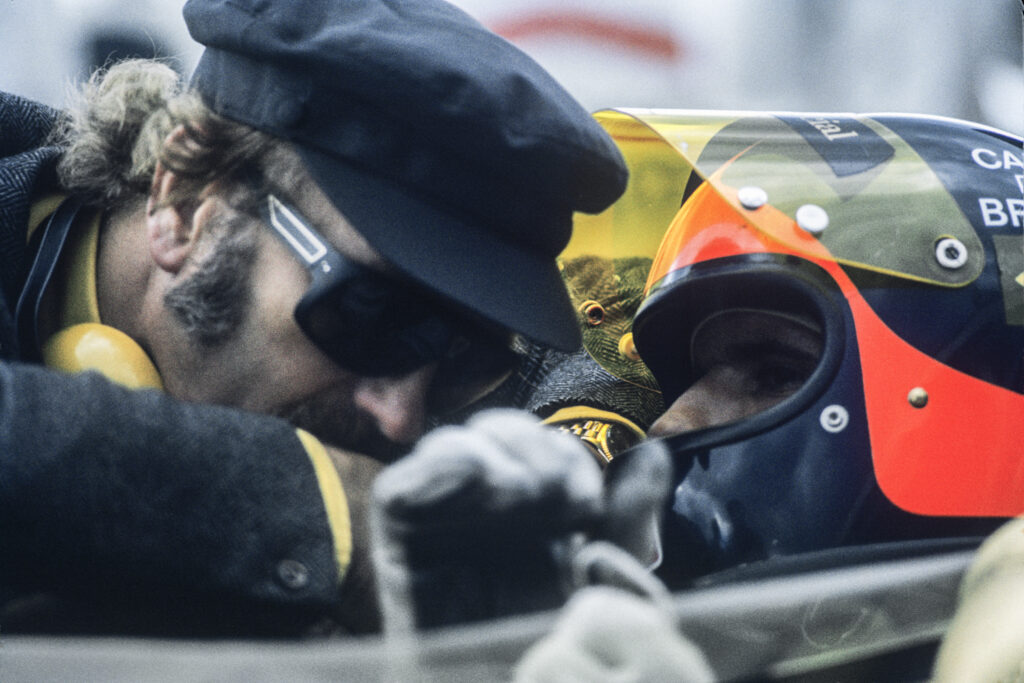
With the two Lotus’ exhibiting superior straightline speed than the Tyrrell at Monza, Chapman was expected to employ team orders between his drivers to help keep their title hopes alive.
Fittipaldi had already expressed disagreement with the way Chapman and Lotus approached team orders, while later going on to claim that the team should’ve intervened in 1973 to stop himself and Peterson from taking points away from each other.
The Brazilian was looking for a way out in 1974 and began doing a deal with personal sponsor Philip Morris to get him a drive at McLaren. Around the same time, Brabham, then headed by Bernie Ecclestone, was looking for sponsorship.
Ecclestone met with Philip Morris to discuss a potential sponsorship with their cigarette company, Marlboro, but it turns out they were trying to secure a bigger deal with McLaren as he explains in the documentary Lucky.
“Philip Morris was a Marlboro brand and helped us build Formula 1. There was a lot of money being brought into the teams, drivers, and anyone who was involved in F1. Patrick Duffeler was helping Philip Morris in Europe with their promotion. We at Brabham were always looking for sponsors, and there was the possibility of us catching Marlboro,” said Ecclestone.
“Emerson and Duffeler had arranged to meet me in Switzerland, and Duffeler committed to signing a contract for Marlboro with us at Brabham. What I didn’t know is that Duffeler was playing us off against McLaren, which I think was his first choice. So in ’74 Emerson and Marlboro finished up [a deal] with McLaren.”
Emerson Fittipaldi loses 1973 title after Colin Chapman refuses team orders
The deal was announced in the days leading up to the Italian GP where Stewart could clinch the title, much to the dismay of Chapman: “I was disappointed when Emerson wanted to leave us. It’s always disappointing when you need to leave and start all over again with someone else.”
Coming into the race at Monza, Stewart only needed to finish as high as fourth while Fittipaldi needed to win all four remaining races of the season to win the title.
Peterson had qualified on pole ahead of Fittipaldi, who would start down in fourth, while Stewart was sixth on the grid. Lotus told both drivers not to race on the opening lap, with Fittipaldi instantly climbing up to second behind Peterson at the line.
Expecting Peterson to move over to keep his title hopes alive, it turns out Chapman had intervened and said they were free to race each other for the 55 laps.
“Colin was very upset that Emerson was sort of dropping Lotus and going to McLaren. So he [Chapman] told Ronnie [Peterson], no team orders [at Monza 1973],” said Ecclestone.
Stewart had picked up a puncture in the opening laps and dropped to 20th, but would go on to fight his way back through the pack to fourth place. Peterson led Fittipaldi on the final lap, with cameras picking up what Chapman as they completed the laps: “All Jackie has to do now is finish and he’s champion…”
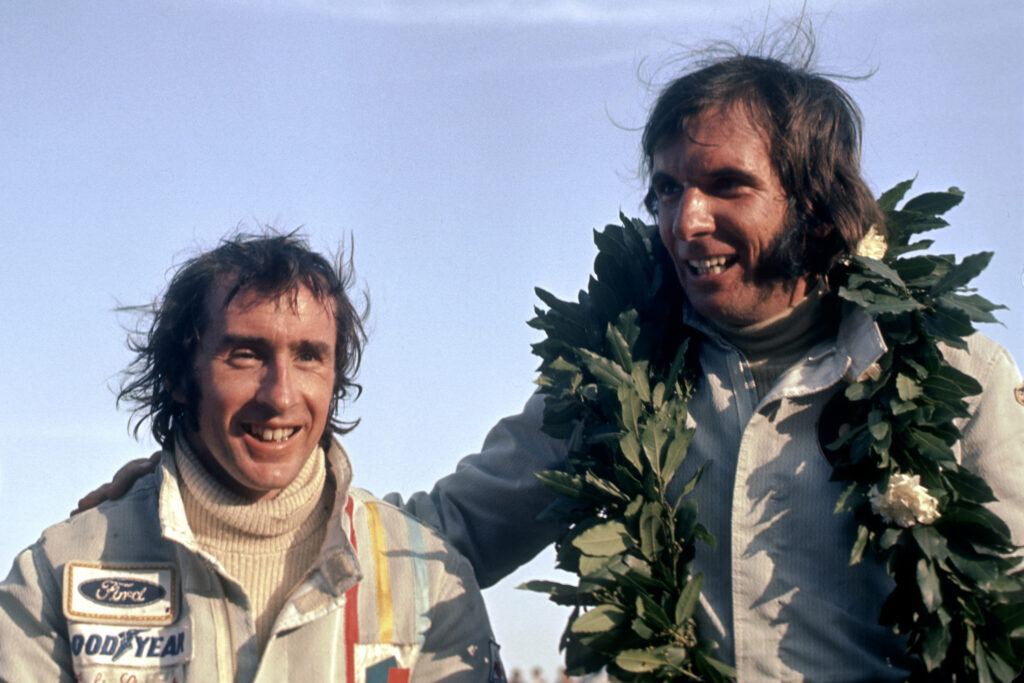
That’s exactly what Stewart did, with the Scot crossing the line in fourth place while Fittipaldi finished second. It effectively handed the title to Stewart, in what would be his third and final in F1.
READ MORE: How Jack Brabham sparked a Formula 1 revolution in 1959 that every team still uses today
Jackie Stewart vows to never race a car again after 1973
The 1973 F1 season would be the final world championship for Jackie Stewart before his retirement, following a tragic accident for teammate Francois Cevert at the final round in Watkins Glen.
Stewart had been persuaded into retiring by his wife Helen Stewart after Cevert’s death, with the Scot withdrawing from the final round out of solidarity.
He would later announce his immediate retirement from F1 and competitive motorsport altogether, going on to confirm in an interview with Michael Parkinson when asked if he will ever get back on track: “No. I’m never going to race a car again. I’ve made up my mind about that and I promised that I’d never get back in and race a car and I never will.”
It was the end of an illustrious career for Stewart, while Fittipaldi’s move to McLaren would yield title success in 1974.