

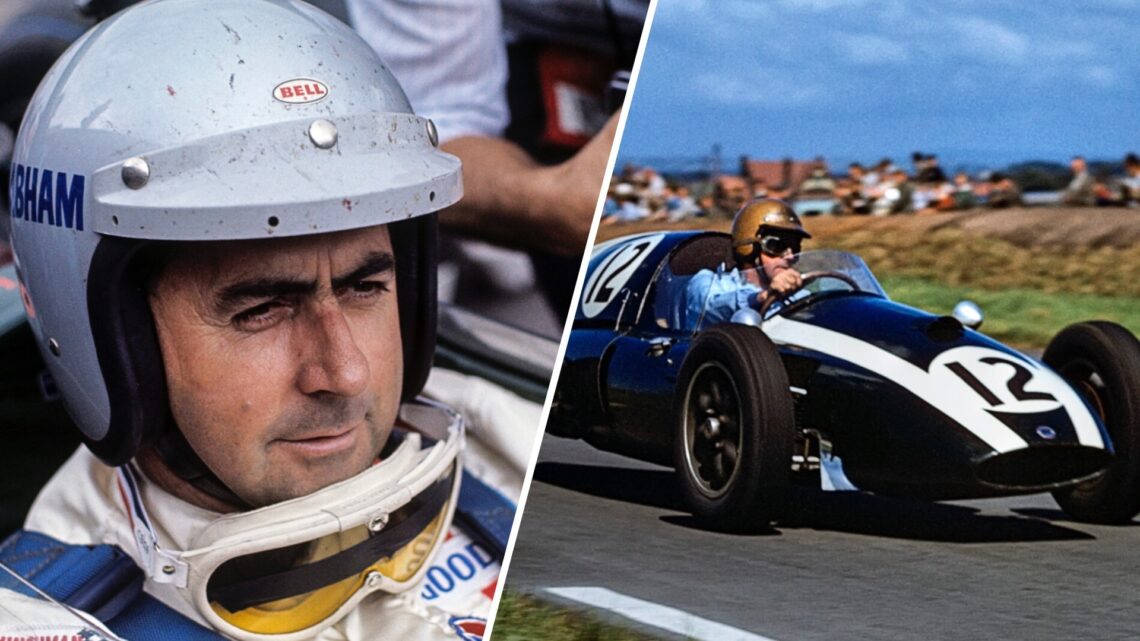


The early years of Formula 1 were full of pioneers, whether it was Colin Chapman who brought the concept of wings and lightness to the cars or the highly successful Cosworth engines.
One of those innovations was first introduced by Cooper in 1959 and has been a key staple of F1 car design ever since.
While the British outfit isn’t as famed as some of the teams that have graced F1 in the past, the small team was the first to place the engine behind the driver.
It was a big innovation at the time, as it unlocked another key area of car design for the teams that gave them a significant advantage over those with cars that had engines mounted at the front.
It also marked a departure from the traditional car design, with lightness and nimbleness starting to take precedence over sheer engine power. Their first title came with Australian Jack Brabham at the wheel, and played a pivotal role in realising the dream of John Cooper.
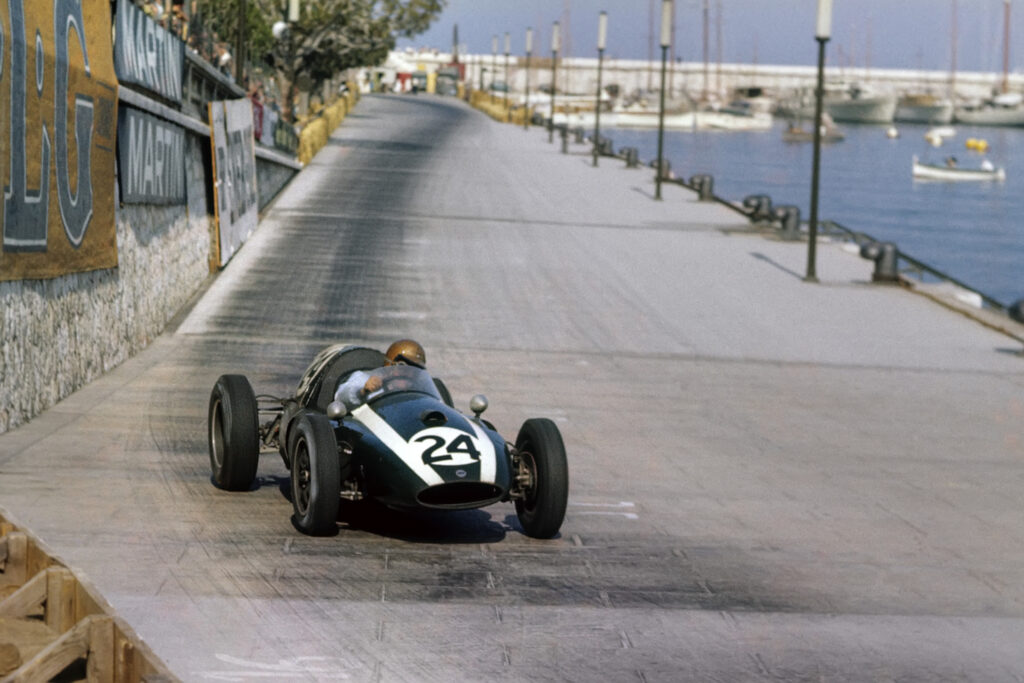
Jack Brabham and John Cooper ushered in an F1 revolution
During the war, Brabham was a mechanic in the Royal Australian Air Force and would go on to set up his own engineering company.
After competing in championships at the national level in Australia, and in 1955 he would make the switch to racing in Europe, where he met the founders of the Cooper Works outfit.
Forging an engineering partnership, it would become one of the most significant in F1 as they introduced the first ever rear-engined drive car on the grid in 1959 in the form of the Cooper T51.
“When he went to F1, he was the main guy. He was the main driver, the main mechanic; he put the engine in the back of the car because previously, up until that point, all the engines were in the front,” said son, David Brabham when speaking on the BBC Sporting Witness podcast.
“The car gets designed around the engine, and you have to shape the car to a certain place. When he put the engine in the back, they could design the car to be a lot more efficient and drivable.”
READ MORE: What happened to Flavio Briatore, Nelson Piquet Jr. and Renault after 2008 Crashgate controversy?
Jack Brabham and Cooper looked into the future of F1
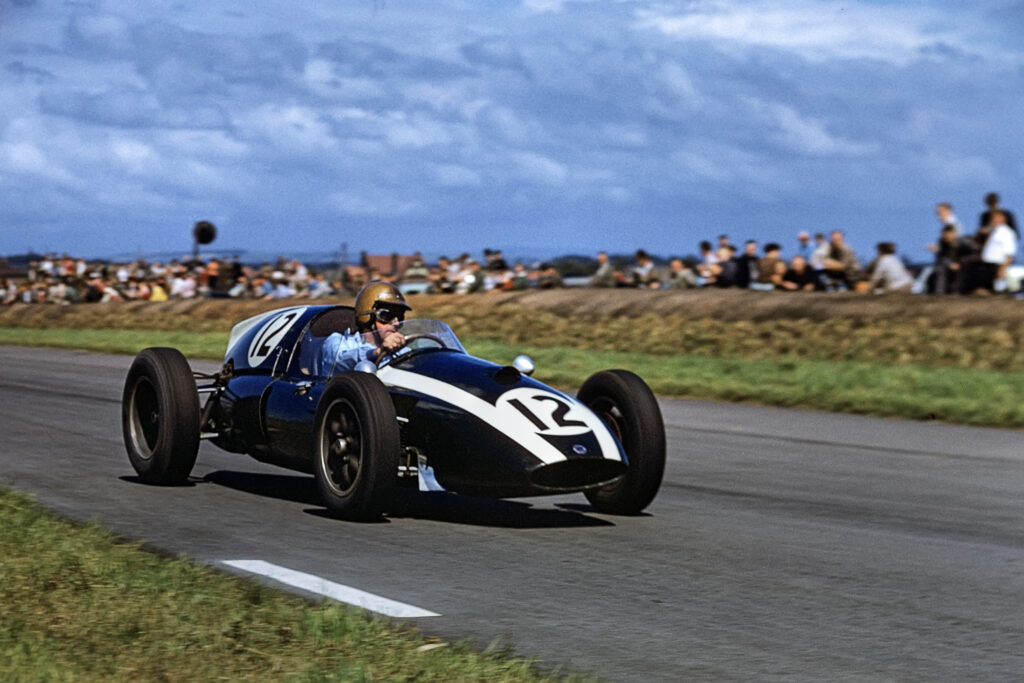
Brabham would go on to win the 1959 title with wins in Monaco and Silverstone, while Stirling Moss won races in Portugal and Italy, and Bruce McLaren won in the US with the same car.
Out of the nine races on the calendar that year, the Cooper T51 took five victories and established a way forward for Formula 1 engineering. No car has won the world championship since 1959 that hasn’t been rear-engined.
“There were times when Dad and Denny Hulme lapped the whole field. They were so fast, and it was just the right combination at the right time. They could look in the future and go ‘That’s what’s needed’ and that’s what they did,” said Brabham.
Further success would come to Cooper in the 1960 season with Brabham, before the Australian left to set up his own team in 1962. Even though success was not immediate, their first win came in 1964 and was followed up by title success in 1966.
Brabham was the last driver in his 40s to win an F1 world championship, with only Lewis Hamilton and Fernando Alonso currently able to achieve that feat at the time of writing.
What happened to the Brabham F1 team?
Brabham would go on to have a lot of success in F1, amassing a total of 35 victories in their 30 years of competing and securing two Constructors’ and four Drivers’ Championships.
Jack Brabham would continue racing for the team until 1970 when he won the South African Grand Prix at the age of 44 years old, but he would go on to sell the shares in the team to his partner Ron Tauranac.
Tauranac would sell the team to Bernie Ecclestone in 1972, who took the team into the next era of F1 which included ground effects and bigger wings that generated downforce.
Ecclestone gave chances for legendary engineer Gordon Murray, three-time world champions Niki Lauda and Nelson Piquet, before selling the team in 1988 to EuroBrun and Walter Brun who would hand it to Swiss financier Joachim Lüthi.
Brabham would enter a period of decline through the early 1990s, and while they were the team who gave Damon Hill his F1 debut, the team would soon close for good at the end of the 1992 season.