

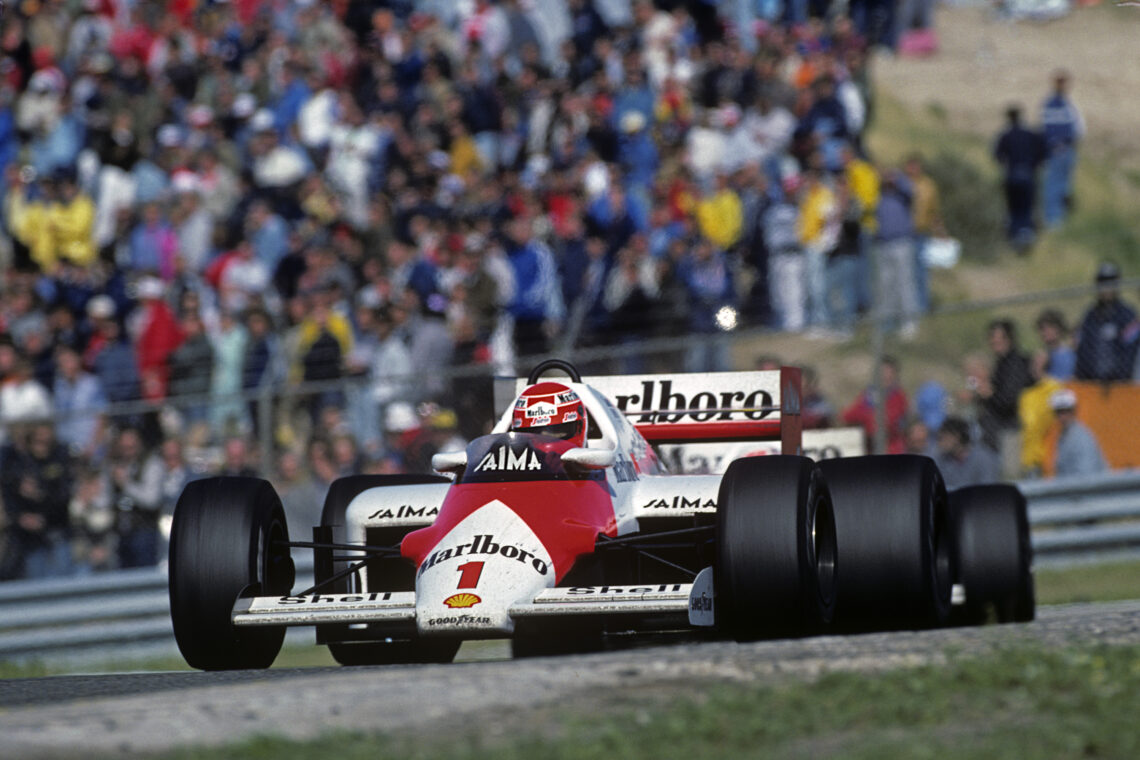


The Zandvoort circuit has been the scene of some classic Formula 1 races over the years, but in 1985, Niki Lauda produced one of the best comeback drives.
After McLaren won 12 of 16 races in 1984, the 1985 season was plagued by reliability problems. Lauda finished just two races out of 10 by the time they reached the 11th round in Zandvoort, while teammate Alain Prost had slightly better luck and was leading the title.
Part of the reliability problems stemmed from the underdeveloped TAG-Porsche engine, which consistently suffered from electronic problems, despite the straight-line speed advantage the MP4/2B had over rivals.
Designed by John Barnard, the MP4/2B also had an inferior turbo system compared to rivals Ferrari, Williams and Lotus, which became apparent at the start of the season in Brazil during qualifying. The brakes also proved hard to cool at certain circuits, leading to a loss in confidence from drivers.
Lauda became frustrated as Prost began to run away with the title, and it wasn’t until Zandvoort that he could pull off one final result for the team and his F1 career.
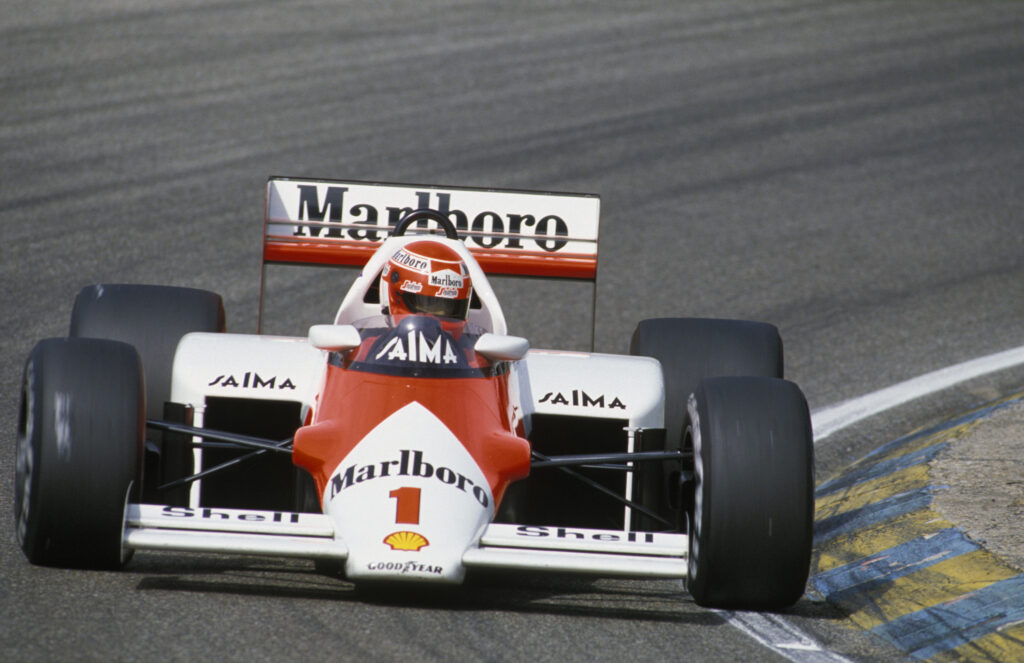
Niki Lauda wins final Grand Prix after spectacular comeback drive at Zandvoort
The problems that plagued McLaren throughout the 1985 season continued at Zandvoort, but Lauda knew this was happy hunting ground for him, having won there two times prior. The motivation to beat the upcoming Prost at the top of his game was high, even if he agreed to help him in the title battle.
Zandvoort has always been one of the outlier tracks on the F1 calendar because it is one of the shortest, and in those days the layout was dramatically different to what the drivers race on today.
Lauda qualified in 10th place with Prost third, while Nelson Piquet and Keke Rosberg locked out the front row in first and second respectively.
Keke Rosberg took an early lead, but 21 laps into the race, his Honda engine expired in a cloud of smoke. Lauda dived into the pits to change tyres, and emerged in eighth place for fresh rubber.
READ MORE: Martin Brundle once damaged his F1 car so severely that a fan was able to pick up the pieces
Alain Prost piles the pressure on Niki Lauda
Lauda would climb up the order and emerge ahead of Ayrton Senna in second, then a few laps later, race leader Prost would pit and come out behind his teammate.
51 laps into the race and Lauda held a 7.1 second advantage, but Alain started to close by half a second per-lap. By Lap 61 they were nose-to-tail, but the turbulent air – often an excuse used by drivers today – prevented him from getting closer and making a move into Tarzan corner.
Lauda also made life difficult for Prost by adjusting his speed to pass the backmarkers without breaking his momentum, which was impacting the Frenchman even more.
Prost grew frustrated and began to lock his brakes, while Lauda maintained the advantage. It was a master class in racecraft from the Austrian, who at 36 years old, took victory ahead of Prost.
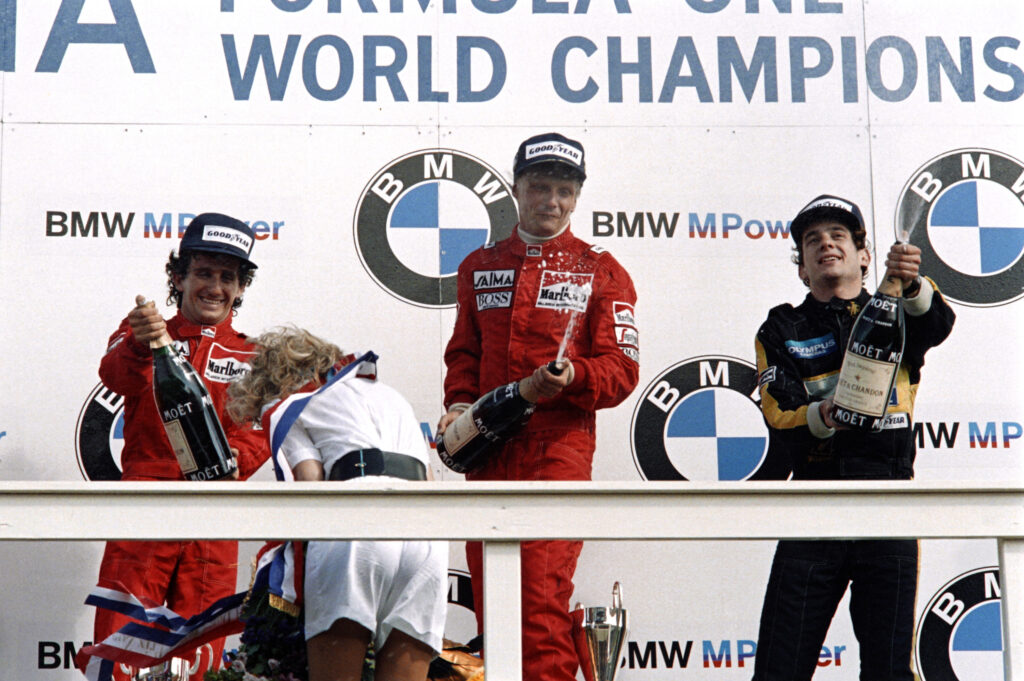
What happened after Niki Lauda’s final Grand Prix victory?
Following his win at Zandvoort, Lauda would not finish an F1 race again in his career. His 25th victory, which tied him with Jim Clark, would be his final.
Lauda missed the Belgian GP due to a wrist injury and then failed to finish in both South Africa and Australia, winding up a disappointing 10th place overall.
Prost would go on to win his first title with McLaren in 1985, which would be the first of four titles in his illustrious career.
Even though Lauda only finished three races that year, McLaren sealed the Constructors’ Championship with an impressive 90 points.