

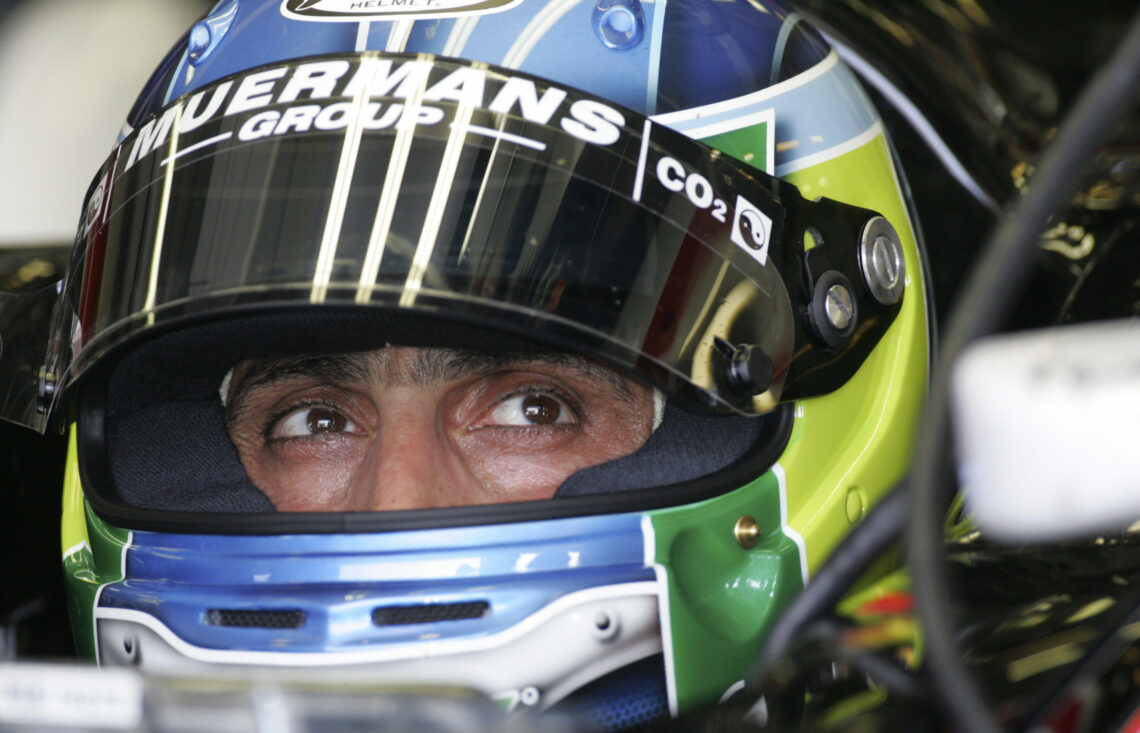


During the 2005 Formula 1 season, the slowest teams on the grid were allowed to run a third car during free practice. This was based on the constructors’ order from the previous campaign.
McLaren, Sauber, Red Bull, Toyota, Jordan and Minardi all had access to this privilege. It was a valuable opportunity to gather additional data.
There were restrictions in place, though, on the identity of the third driver. They were only eligible if they had a superlicence and had raced in fewer than six Grands Prix in the past two seasons.
| RANK | TEAM | PTS |
| 1 | Ferrari | 262 |
| 2 | BAR | 119 |
| 3 | Honda | 105 |
| 4 | Williams | 88 |
| 5 | McLaren | 69 |
| 6 | Sauber | 34 |
| 7 | Jaguar | 10 |
| 8 | Toyota | 9 |
| 9 | Jordan | 5 |
| 10 | Minardi | 1 |
Nowadays, teams are required to field a rookie in four FP1 sessions as a replacement for one of their full-time drivers. But the third-car rule lent itself to a more experienced hand.
Chanoch Nissany stayed in his Minardi F1 car while it was recovered
Minardi were backmarkers in 2005, scoring just seven points all season. Christijan Albers held the seat for the entire year, with Robert Doornbos replacing Patrick Friesacher shortly before the Hungarian Grand Prix.
For the Budapest round, Minardi fielded Chanoch Nissany in their third cockpit. The Israeli racing driver was celebrating his 42nd birthday.
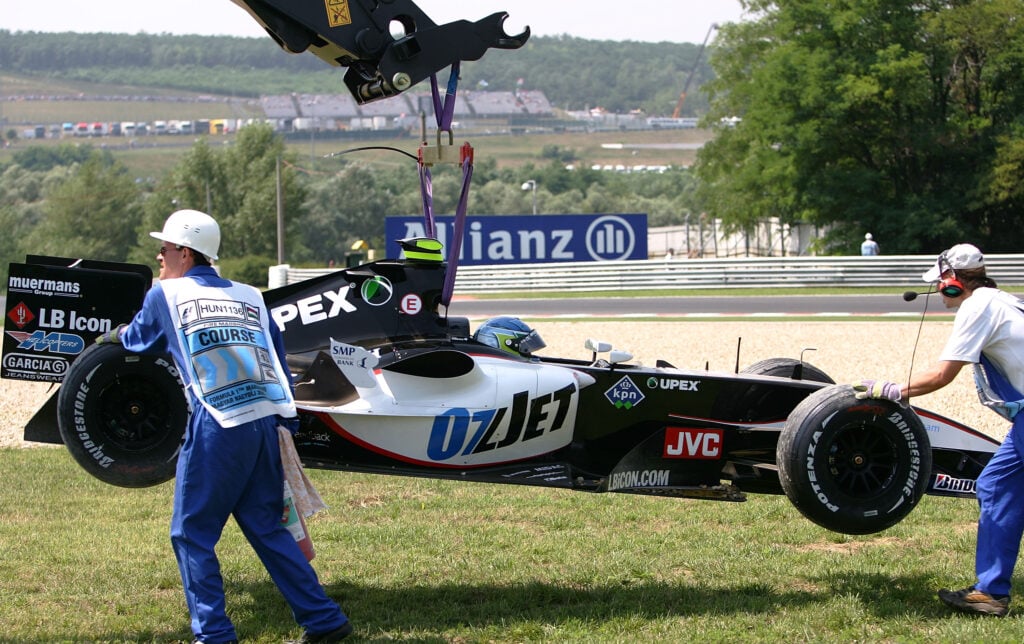
While he’d tested an F1 car before on multiple occasions, he appeared to be below the level required for an official session. Nissany finished a remarkable 12.9 seconds off the pace of McLaren’s Alex Wurz, another third driver.
With just under 17 minutes of the session remaining, he spun and beached his car in the gravel. Rather than climbing out of the cockpit before it was recovered by a crane – as is customary – he stayed put.
What happened to Chanoch Nissany after his Formula 1 debut?
After he failed to meet F1 standard, Nissany wouldn’t appear in a Grand Prix weekend again. He instead competed in the Formula 2000 Hungarian National Championship, a series he’d won in 2004, for another decade.
“My target was very clear: to be an official Formula 1 driver and to drive the Formula 1 car,” he told Motorsport.com. “And this I did and I achieved.”
Nissany had a son, Roy, who went on to become a test driver for Sauber and Williams. He competed in F2 between 2018 and 2023, scoring one podium.
For 2025, Nissany Jr switched to the World Endurance Championship, where he raced in the LMP2 class. His achievements are no doubt another source of pride for his father.