

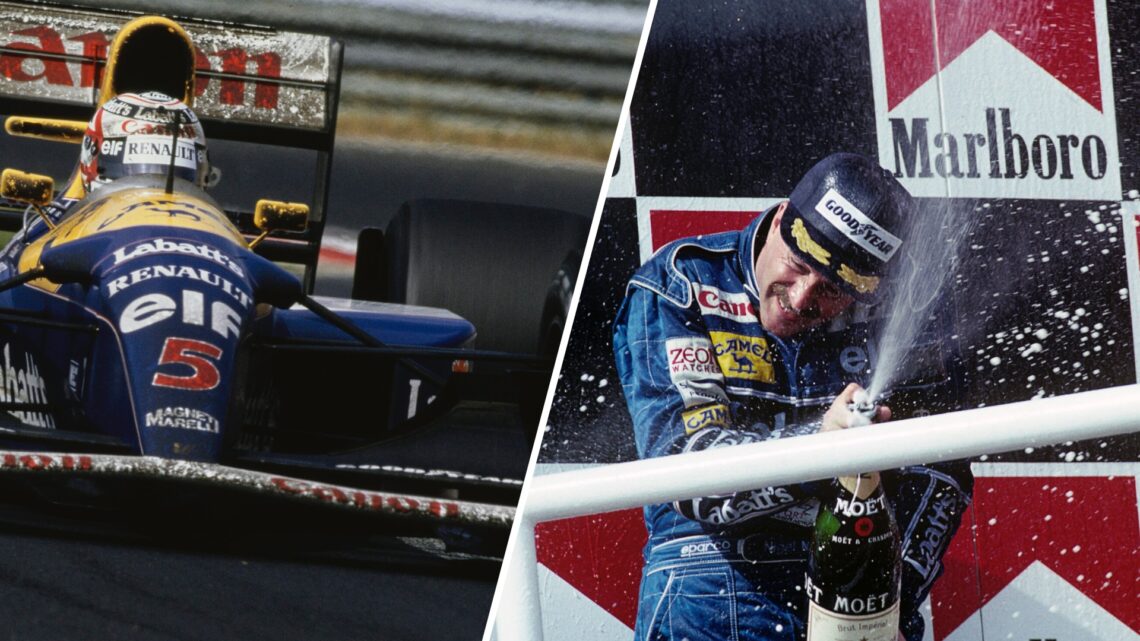

The Hungaroring has been the scene of some special moments in Formula 1, and in 1992 it was the place where Nigel Mansell was crowned world champion at long last.
It was at the height of Mansell Mania and ‘Our Nige’ fandom, particularly at the British Grand Prix, when the classic Red 5 crossed the line to win in front of the home crowd.
Mansell extended his championship lead to 76 points over his teammate Riccardo Patrese, who was only on 40 points at this stage of the season.
Following an eighth victory at the next race in Germany, Mansell went into the Hungarian GP with a chance of winning his first championship.
FIA fuel row puts Nigel Mansell win in doubt
Mansell was dominating after equalling Ayrton Senna’s record for most wins in a season, with eight victories out of 10 races.
It looked certain that Senna would lose his crown at McLaren, but the team arrived at Hungary with a new traction control system.
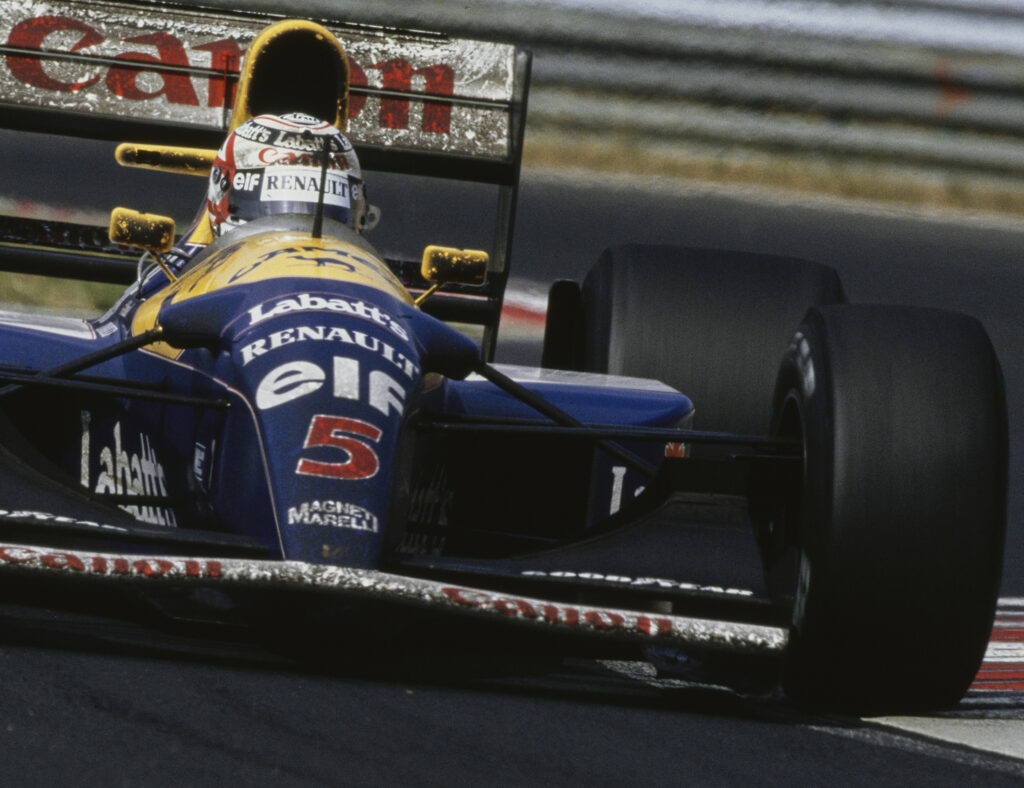
Williams was still the team to beat, with the FW14B giving Mansell and Patrese a competitive edge. In an effort to curb the number of teams using exotic fuel mixtures, the FIA tried to limit teams by forcing them to use only fuels they could purchase from petrol stations.
Paddock rumours suggested that this would impact Williams and the amount of horsepower that his Renault engine would output, but Mansell had the added benefit of Hungary being a circuit that has a lot of emphasis on downforce.
Nigel Mansell negotiates difficult Hungarian Grand Prix
Mansell qualified second on the grid, but after a poor start off the line he was swamped by both McLarens of Senna and Gerhard Berger heading into the first corner.
Michael Schumacher also briefly put pressure on Mansell, but the Briton would go on to stay ahead and regain the place from Berger with a move eight laps into the race.
The threat of a Safety Car came when several drivers retired due to incidents, although the slick operation that we know today wasn’t as fine tuned. Marshals had briefly displayed the ‘SC’ boards but Race Control had not dispatched the pace car onto the track.
Race leader Patrese had backed off and lost time, while Mansell caught up to the back of Senna. The Briton would make a mistake at the penultimate corner, allowing Berger back past briefly before he retook the position thanks to backmarker traffic.
As Mansell began to close on Senna, Patrese had spun and recovered to seventh place and out of the points. This meant Mansell could claim six points with Patrese on zero, as in those days points were only awarded down to sixth.
Nigel Mansell finishes second after eventful Hungarian Grand Prix
Chasing down Senna for the lead, Mansell would begin to lose ground as his FW14B developed a puncture. He was forced to pit and returned to sixth place.
Mansell was handed some fortune when Schumacher’s rear wing flew off after earlier contact with teammate Martin Brundle while battling for position. The Williams driver would pick off Johnny Herbert, Brundle and Berger at the first corner, making his way back into second place.
With Senna off into the distance, Mansell would remain patient and bring his Williams home across the line 40 seconds later to claim his first world championship.
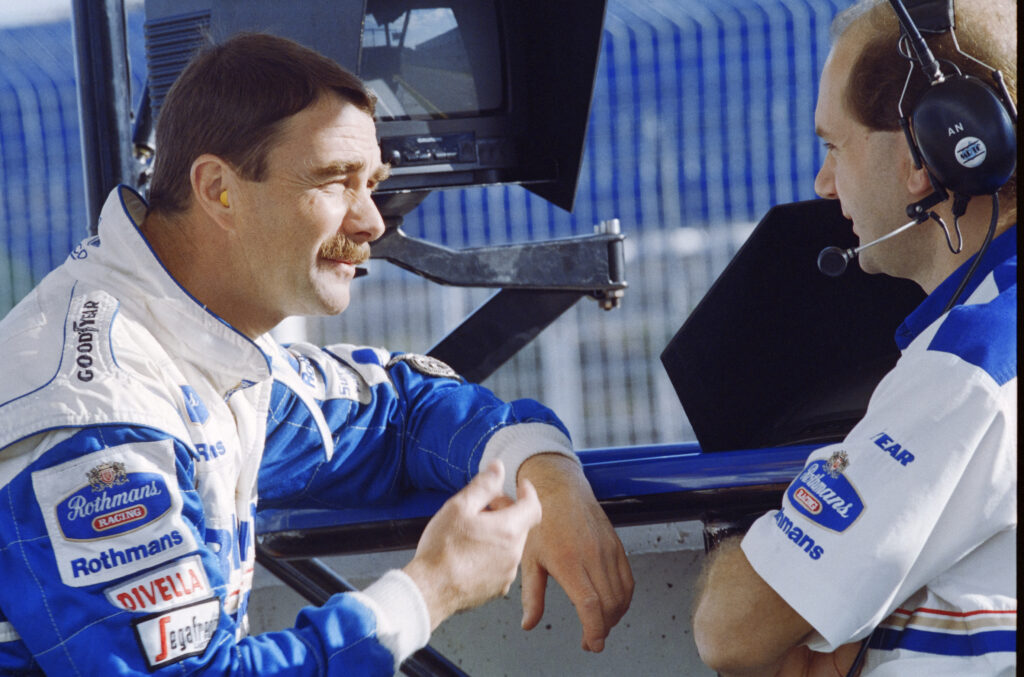
Adrian Newey said first F1 title ‘one of the best days of my life’
Newey, who was the mastermind behind the FW14B along with the guidance of Patrick Head, branded it the best day of his life as he realised a dream from when he was a kid.
“I put that achievement right up there with my children being born. That’s a bit naughty of me, I suppose, but in my defence, it was something my whole life had been leading up to,” wrote Newey in his book, How to Build a Car.
“From the sketching on bits of paper, making models, right up to becoming the person responsible for the design of a racing car that’s won a F1 championship. I remember thinking: This is one of the best days of my life.”
Mansell’s contract for 1993 became a talking point in the aftermath of the race, with speculation that Williams had signed Alain Prost under pressure from Renault.
The rumours would prove to be true, and while Mansell thought he could agree on terms with Frank Williams to remain at the team in 1993, these would break down and the Briton would make the switch to IndyCar.