

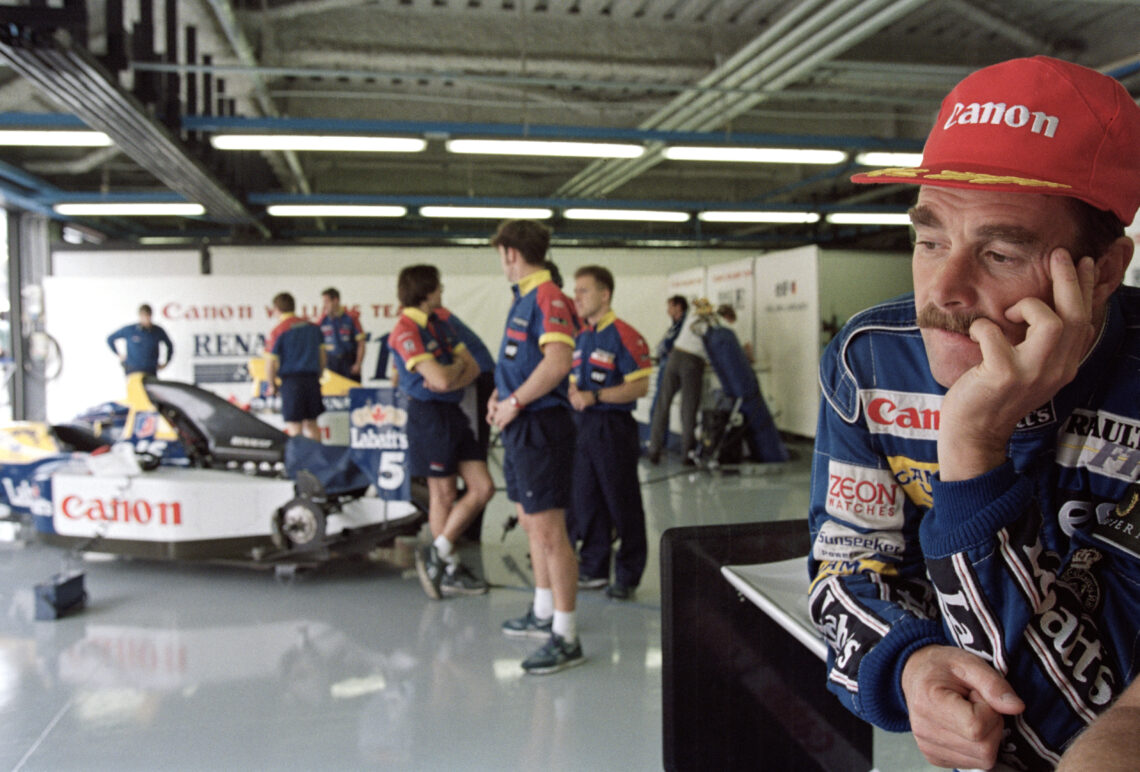


The 1990s are seen as the golden era of Williams Racing. As an independent constructor going up against the likes of Ferrari and McLaren, the team had to resort to technical innovations in order to get ahead.
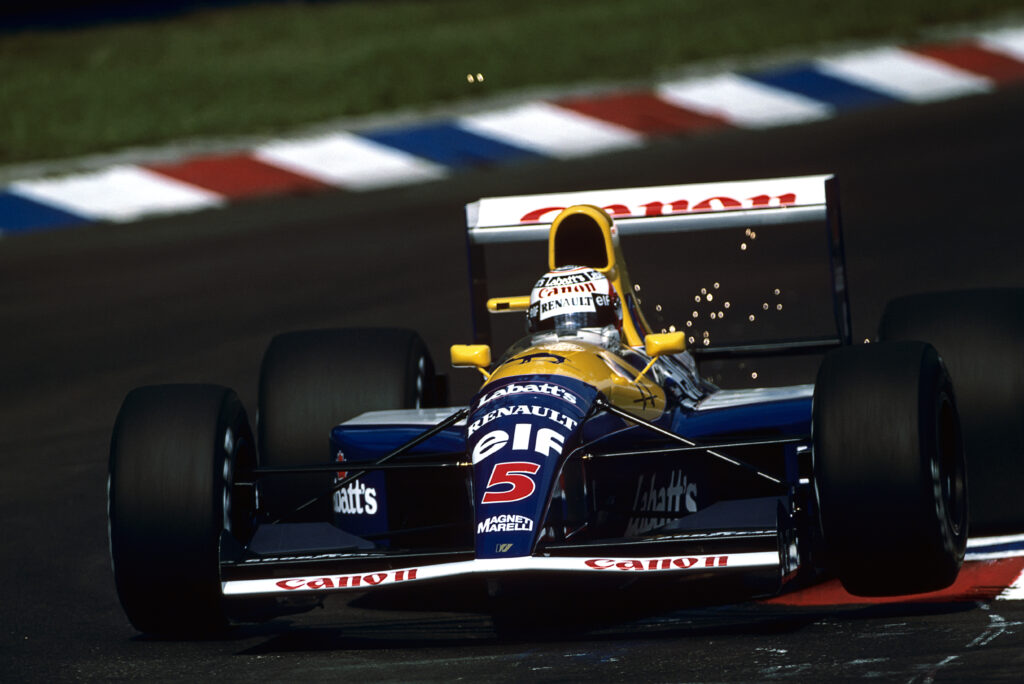
In 1991, Williams introduced the FW14. Designed by Adrian Newey, the Renault-powered F1 car featured a range of cutting-edge technologies such as active suspension, traction control and a semi-automatic gearbox.
Williams began developing a concept of the sequential gearbox in 1986, but it wasn’t until Ferrari introduced the 640 in 1989 with a semi-automatic transmission that Williams took the idea seriously.
“We had a great guy in our prototype department called Ian Anderson,” Patrick Head, Williams’ Director of Engineering, said, via racecar-engineering.com. “He was our chief mechanic when we first started winning grands prix in ’79, and he had a very natural technical ability.
“He thought the semi-auto gearbox was the best thing since sliced bread, and a week after we gave him the drawings, he had a gearbox all up and running. Without him, we’d have been a year later with it.”
READ MORE: Why Schumacher called Hill ‘really stupid’ for an incident at 1995 British GP
The sequential gearbox ‘cost’ Williams the 1991 championship due to unreliability
There’s a saying in F1 that has been attributed to multiple drivers over the years, but no matter who coined it, it always seems to ring true. That saying is, ‘in order to finish first, you first have to finish.’
This is exactly what caused Williams to miss out on the constructors’ and drivers’ championships in 1991.
“We ran the system on track for the first time in 1990, but we didn’t race it,” Head continued. “It was then part of the FW14 in ’91, and I think the system cost us that year’s championship because we had appalling reliability in the first four races.
“The problems were very easily solved, and from mid-season we were very fast and reliable. All of our cars since have had semi-automatic gearboxes.”
“There was a discussion in ’93 about banning semi-auto ’boxes because people like Alain Prost viewed changing gear with a lever as part of a driver’s skill-set.
“But we decided to keep semi-auto gearboxes because 95% of engine failures in the old days were caused by a driver changing down too early and over-revving the engine. The moment you have gear-shifting under electronic control, over-revved engines are out the door and life is much cheaper!”
READ MORE: How Hamilton and Vettel’s ‘friendship’ blossomed after 2017 Azerbaijan GP incident
Williams went on to dominate F1 after getting the semi-automatic gearbox right
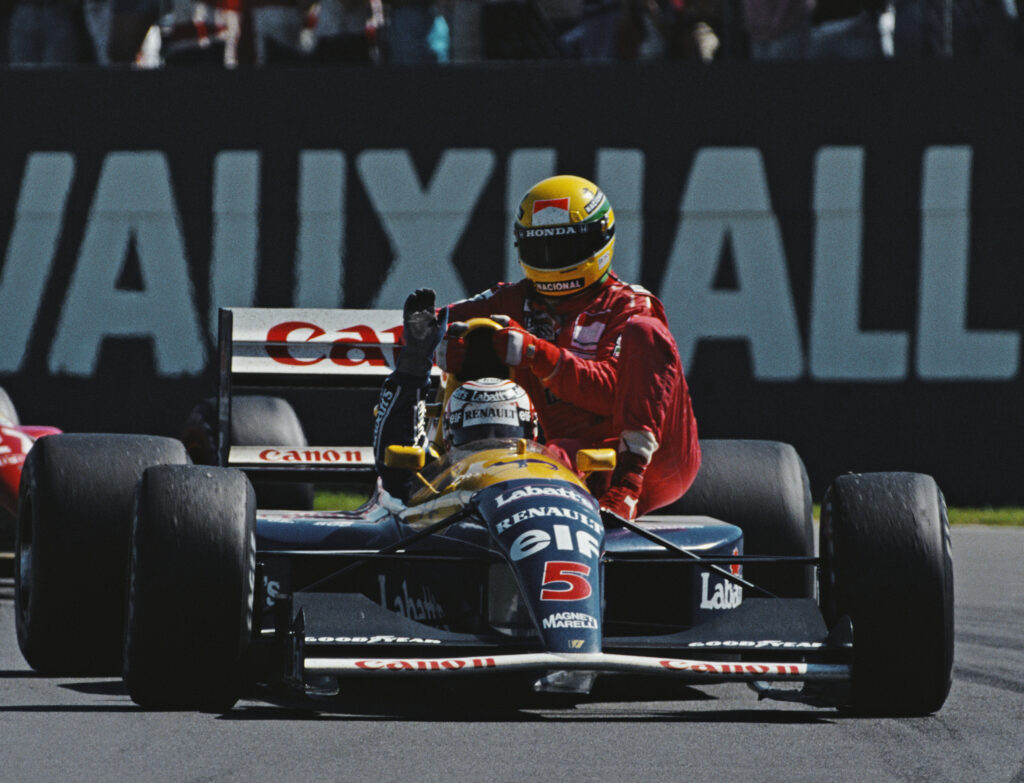
After figuring out the issues of its predecessor, Williams returned to F1 in 1992 with the now iconic FW14B. Nigel Mansell dominated the first five races of the season in a driver/car pairing known as ‘Red Five’ due to the bright red #5 identifying Mansell on the front of the car.
| Position | Driver | Team | Points |
| 1 | Nigel Mansell | Williams | 108 |
| 2 | Ricardo Patrese | Williams | 56 |
| 3 | Michael Schumacher | Benneton | 53 |
| 4 | Ayrton Senna | McLaren | 50 |
| 5 | Gerhard Berger | McLaren | 49 |
The team went on to win both championships that year with ease, with the closest driver to Mansell being teammate Ricardo Patrese, who had nearly half the points of the Brit.
Not happy with the signing of Alain Prost before the start of the 1993 season, Mansell opted not to stay with the team in an attempt to defend his title and instead took his talents to the Indycar championship in the United States.
The Professor seized his opportunity to dominate for the British constructor, winning seven Grands Prix on his way to his third and final F1 world championship.